
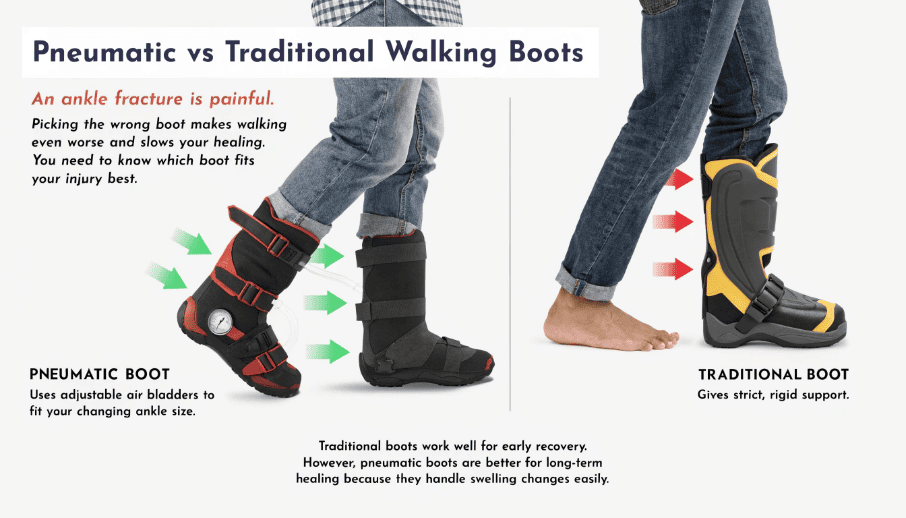
An ankle fracture is painful. Picking the wrong boot makes walking even worse and slows your healing. You need to know which boot fits your injury best.
Pneumatic boots1 use adjustable air bladders to fit your changing ankle size. Traditional boots give strict, rigid support. Traditional boots2 work well for early recovery. However, pneumatic boots are better for long-term healing because they handle swelling changes3 easily.
I broke my ankle years ago. Choosing the right boot was very confusing for me. Let me share what I learned at Medisolemates so you can make the best choice for your foot.
Why Do Swelling Changes Make Pneumatic Boots Better For Ankle Recovery?
Swelling changes every day after an injury. A loose boot causes friction, but a tight boot causes pain. You must manage this swelling to heal properly.
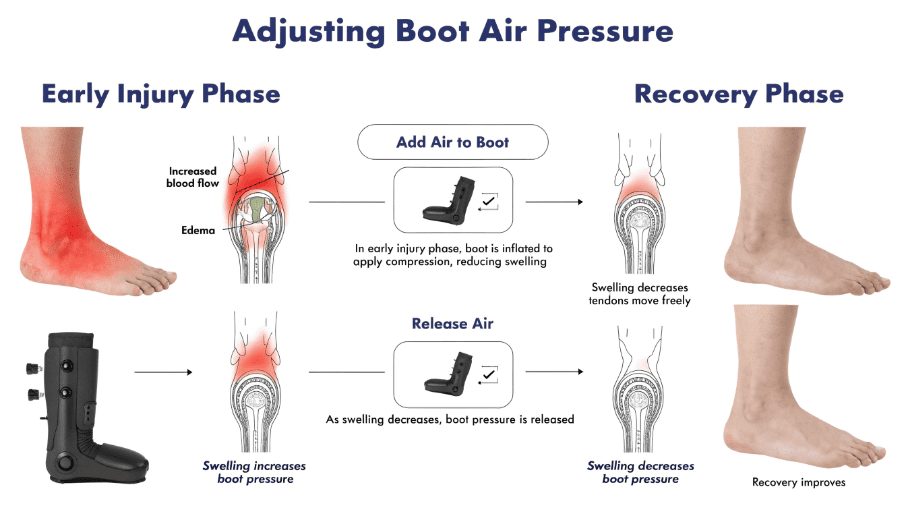
Pneumatic boots have built-in air pumps4. You can add air when swelling is high in the first 72 hours. When swelling goes down later, you release air. This stops joint stiffness and prevents muscle loss.
The Problem With Rigid Support
When you first break your ankle, the doctor wants strict rest. A traditional boot gives a constant, hard hold. This is good for the first few days. But your body changes. I remember my own ankle looked like a balloon at first. Then, a week later, it shrank. My old traditional boot felt too big. My foot slid around inside it. This sliding is dangerous for a new bone fracture. A traditional boot cannot adapt to these body changes.
Dynamic Fit For Better Healing
Pneumatic boots solve this problem easily. They use air cells to hug your foot. You just push a button to change the pressure. This means the boot grows and shrinks with your leg. We see this all the time at Medisolemates. Our pneumatic walking boots allow patients to adjust the fit themselves. When the inflammation drops, you let out some air. This lets your joints move a little bit. Small movements keep your muscles strong. You heal faster when your muscles do not waste away from being locked too tight.
| Boot Type | First 72 Hours | After 2 Weeks | Muscle Atrophy Risk |
|---|---|---|---|
| Traditional Boot | Good support | Loose fit | High |
| Pneumatic Boot | Firm air pressure | Less air pressure | Low |
Can The Right Boot Actually Speed Up Your Ankle Fracture Recovery?
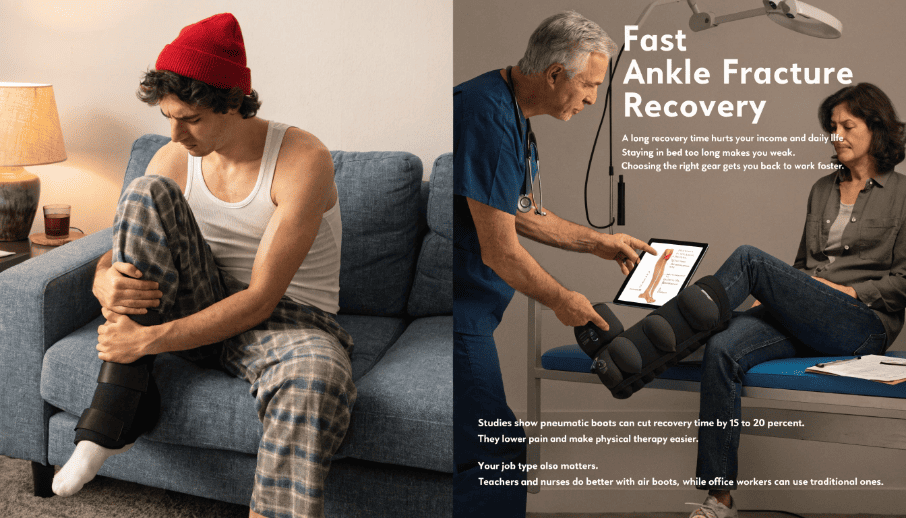
A long recovery time5 hurts your income and daily life. Staying in bed too long makes you weak. Choosing the right gear gets you back to work faster.
Studies show pneumatic boots can cut recovery time by 15 to 20 percent. They lower pain and make physical therapy easier. Your job type also matters. Teachers and nurses do better with air boots, while office workers can use traditional ones.
Faster Return To Normal Life
Nobody wants to wear a heavy boot for months. The data shows that adjustable boots help patients walk sooner. Why does this happen? The answer is comfort. If your boot hurts, you will not do your physical therapy. If your boot feels good, you will practice walking. I always tell our clients at Medisolemates that comfort leads to action. Action leads to fast healing. The air foam and air gel materials we use make sure you feel no hard plastic rubbing on your skin. You feel supported and safe when you take your first steps.
Match The Boot To Your Job
You need to think about your daily life. Do you sit at a desk all day? A traditional boot is fine. But what if you are a retail worker, a teacher, or a nurse? You need to stand and walk. A pneumatic boot absorbs shocks when you step. It protects your heel and ankle from the hard floor. You can return to work sooner because the boot acts like a cushion for your foot.
| Profession Type | Daily Activity Level | Best Boot Choice | Reason |
|---|---|---|---|
| Office Worker | Low (mostly sitting) | Traditional | Cost-effective, rigid hold |
| Nurse / Teacher | High (frequent walking) | Pneumatic | Better shock absorption6 |
| Retail Staff | High (standing long) | Pneumatic | Custom comfort and fit |
Will You Need To Buy Multiple Boots During Your Healing Process?
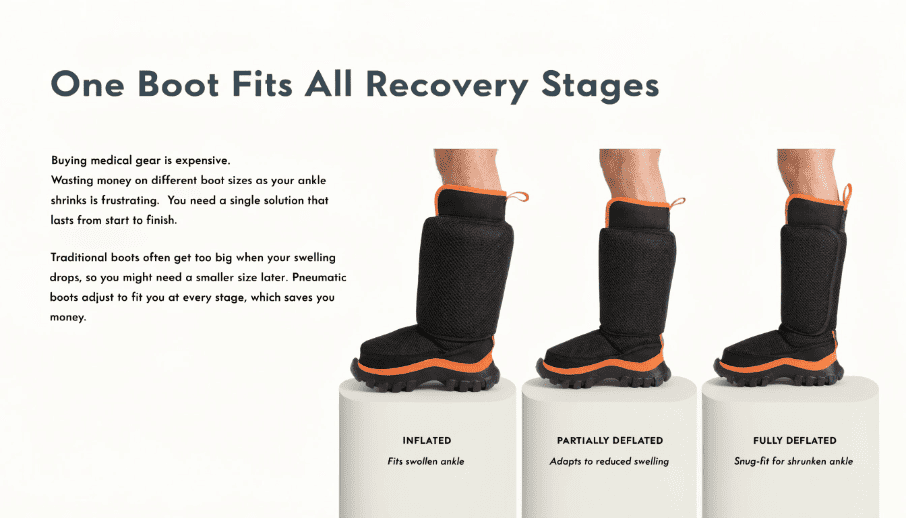
Buying medical gear7 is expensive. Wasting money on different boot sizes as your ankle shrinks is frustrating. You need a single solution that lasts from start to finish.
You can use one pneumatic boot for your whole recovery. Traditional boots often get too big when your swelling drops, so you might need a smaller size later. Pneumatic boots adjust to fit you at every stage, which saves you money.
The Hidden Cost Of Traditional Boots
Many people think traditional boots are cheaper. The price tag is lower at first. But they forget about the swelling. When the swelling goes away, the leg gets much thinner. A hard plastic boot cannot shrink. I have seen many patients buy a large boot in week one. By week four, they have to buy a medium boot because the first one is unsafe. This means you buy two boots instead of one. This adds stress and cost to your recovery.
One Boot From Acute Phase To Rehab
A pneumatic boot is a one-time purchase8. The air bladders fill the empty space. When your leg is big, you use less air. When your leg is thin, you pump in more air. At Medisolemates, we design our pneumatic walking boots to follow you through the whole journey. This single purchase covers the strict rest phase and the active physical therapy9 phase. You save money and avoid the hassle of finding a new size. You get continuous protection without spending more cash.
| Recovery Phase | Leg Size | Traditional Boot Action | Pneumatic Boot Action |
|---|---|---|---|
| Week 1 (Acute) | Very swollen | Fits well | Deflate air slightly |
| Week 3 (Healing) | Normal size | Loose, needs new boot | Pump air to fill gap |
| Week 6 (Rehab) | Muscle loss | Very loose, unsafe | Keep air pumped for fit |
Traditional boots work well for early rigid support. However, pneumatic boots offer better comfort, save money, and speed up your recovery journey. Always ask your doctor before making a choice.
Explore how pneumatic boots can enhance comfort and speed up recovery for ankle injuries. ↩
Learn about the limitations of traditional boots and why they may not be the best choice for recovery. ↩
Understand the impact of swelling on healing and how to manage it effectively. ↩
Find out how air pumps can adjust to swelling and improve comfort during recovery. ↩
Find out methods to speed up recovery time and get back to your normal activities sooner. ↩
Explore the significance of shock absorption in boots for a safer and more comfortable recovery. ↩
Get insights on choosing the right medical gear to support your recovery journey. ↩
Explore this resource to understand how a one-time purchase can save you money and hassle during recovery. ↩
Discover how the right boot can make physical therapy more effective and less painful. ↩
