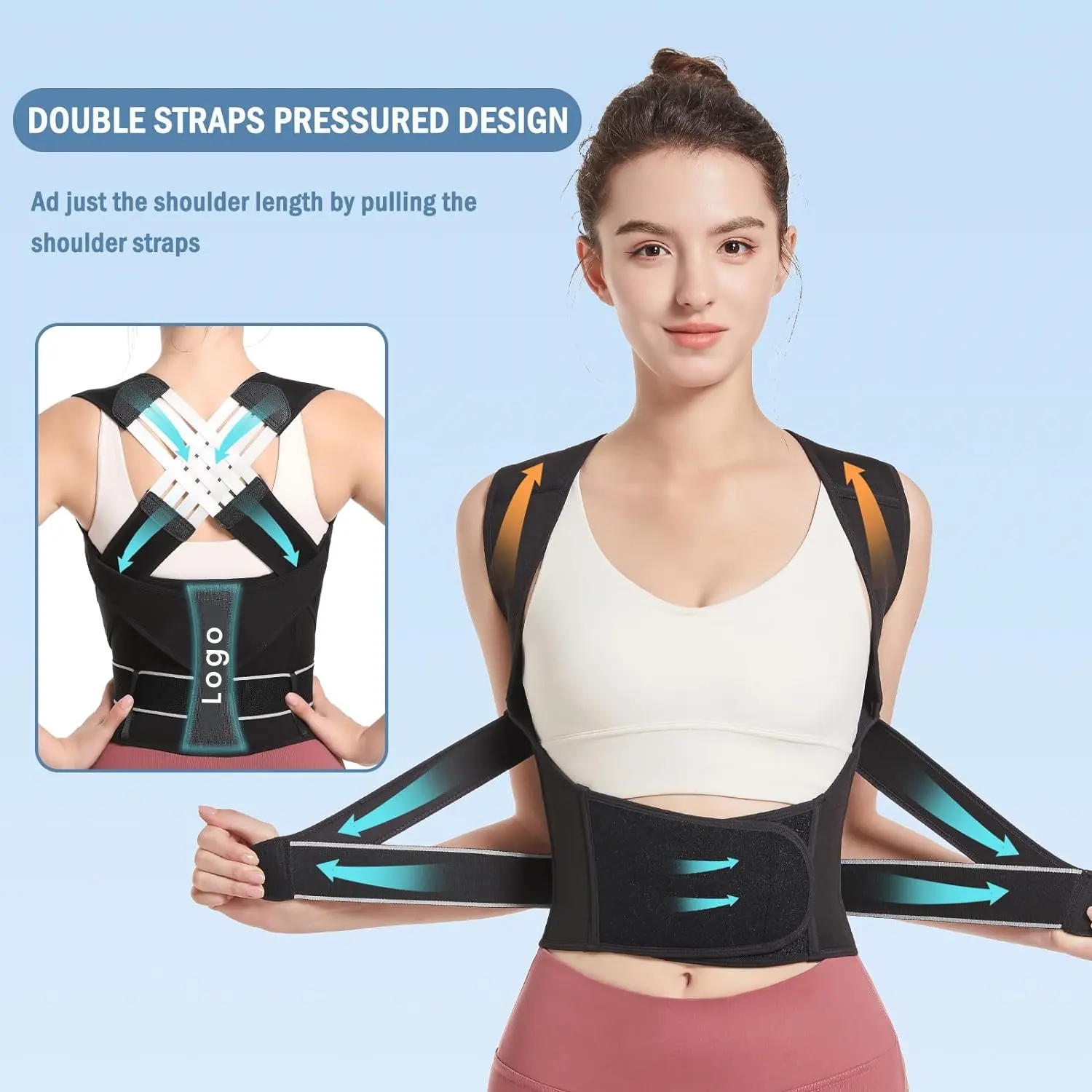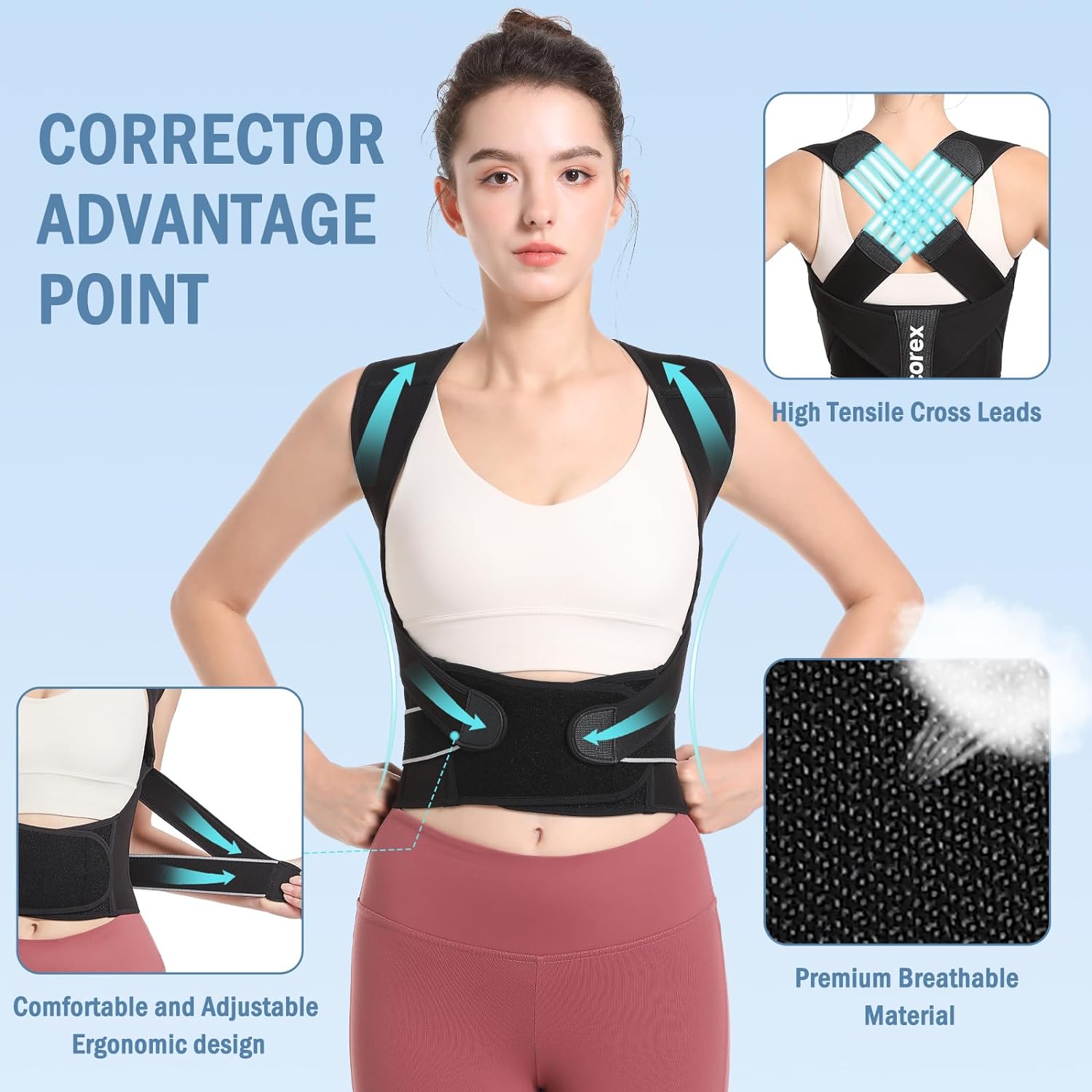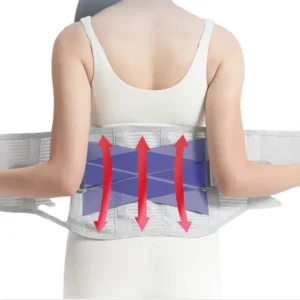
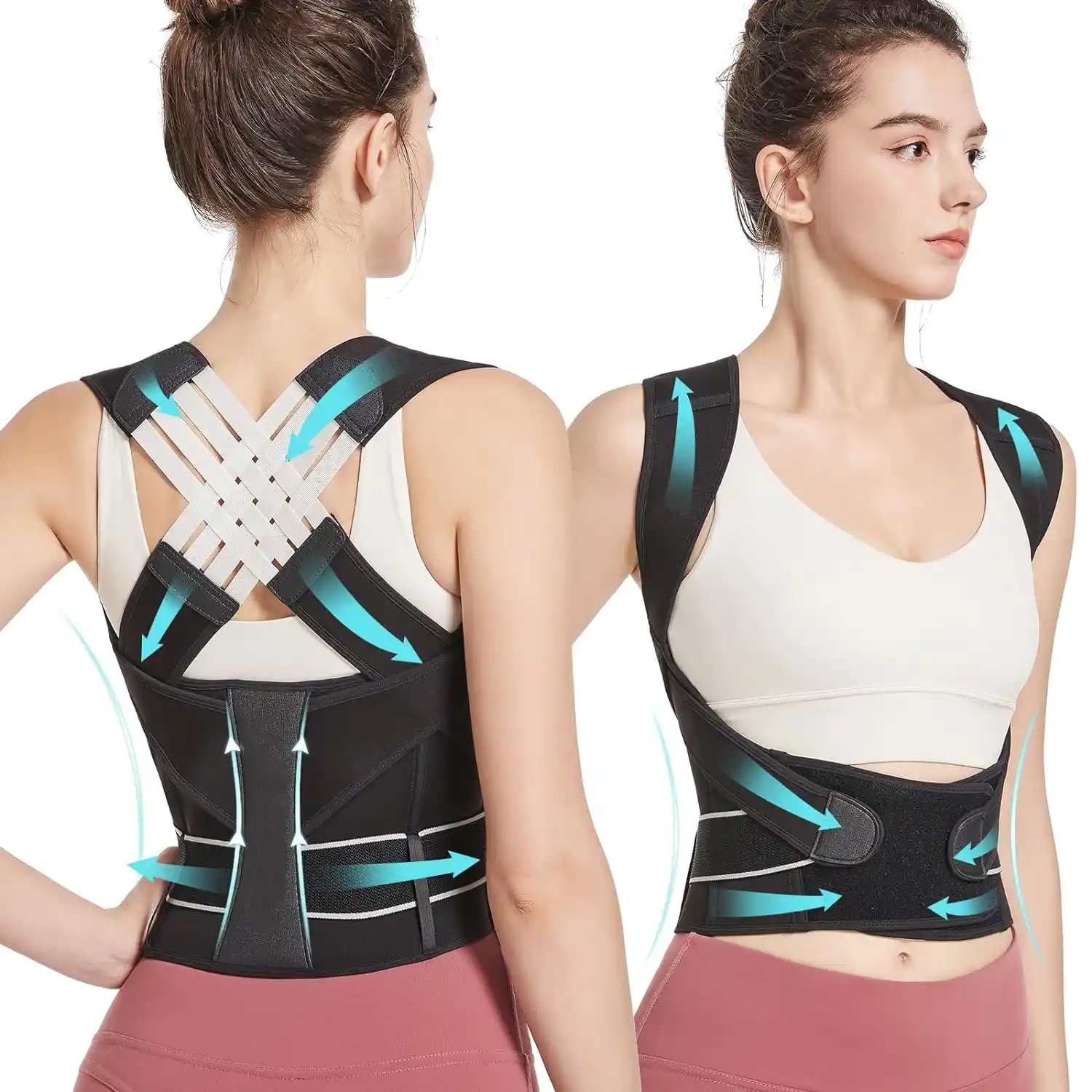
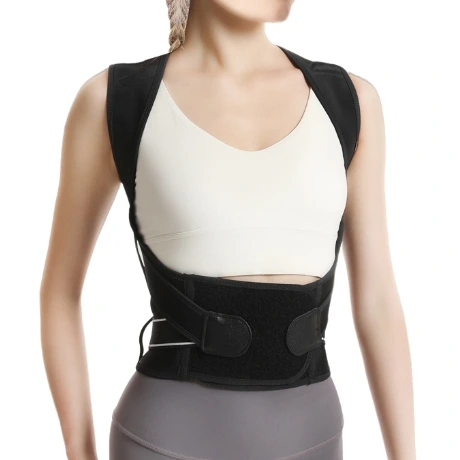
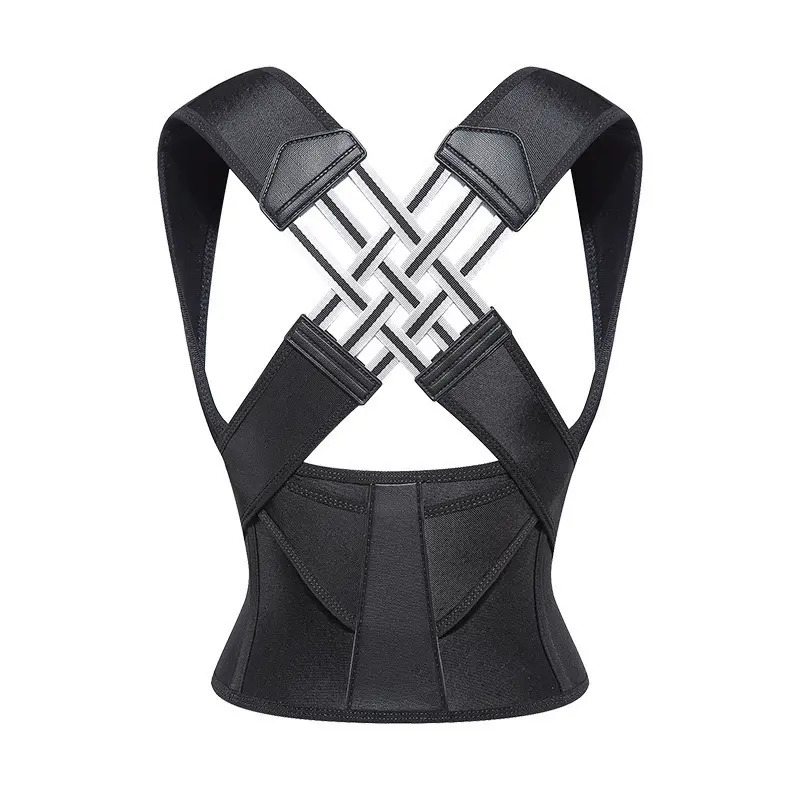
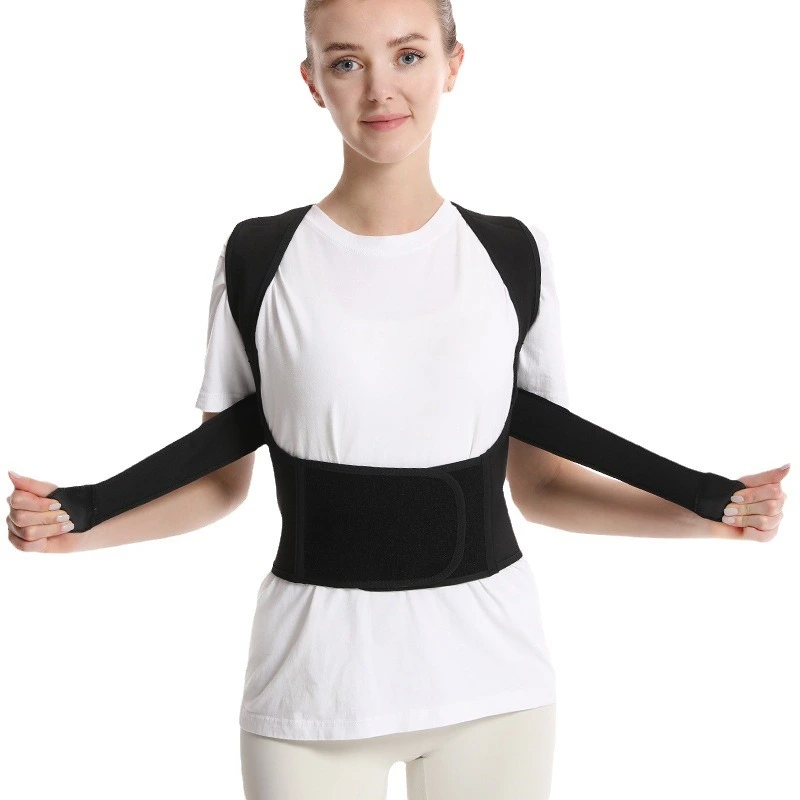
This is the SKU we hand to buyers whose customer is asking about posture, not about lumbar support. The MSB11 is an upper-back and clavicle-area posture corrector. It draws the shoulders back and holds them there. It does not strap across the waist or lift the lumbar spine. The correction happens through two straps. Those straps cross in an X across the upper back. They anchor at a single front closure. The wearer pulls the side wings forward, then closes the front. The X pulls the shoulders rearward, with no separate back panel needed.
The product page lists five size runs: S, M, L, XL and XXL. Most competing posture correctors stop at L. The extra two sizes are not a marketing line. They come from a recurring buyer request, especially in Europe, where men above 100 kg routinely need an XL or XXL to get the strap tension right. We can cut the same brace to a smaller or larger size run if your retail programme asks for it.
Three design notes you will see come back in wholesale conversations. The back straps are vented elastic. Heat passes through them. Sweat passes through them. That is what allows the wearer to wear the brace under a shirt for an afternoon, instead of only over a T-shirt for ten minutes. The front closure is single-handed. The wearer can take the brace off without reaching behind the back, which matters when the wearer has just unstrapped and wants to put it back on without thinking about it. The straps are stitched, not bonded, so a frayed strap can be replaced rather than forcing a new brace.
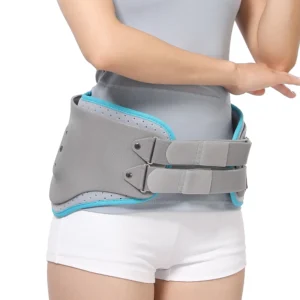
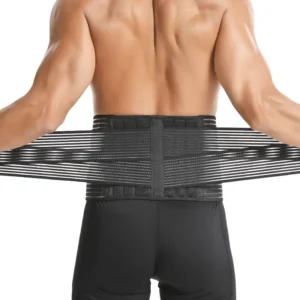
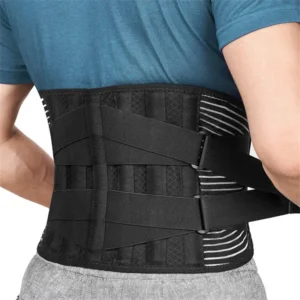
If your buyer is looking for lumbar support, the picture is different. Lumbar support means heavy-duty at the back, dual tension straps at the side, four PP stays behind the lumbar panel. For that specification, see the Adjustable Back Brace MSB12. For a single-size neoprene upper-back brace with hook-and-loop shoulder straps, see the Adjustable Upper Back Brace MSB10. For pelvic rather than upper-back or lumbar, see the Sacroiliac Hip Belt MSB09.
The MSB11 is built around three components: the X-shaped back strap pair, the vented elastic webbing and the front closure panel.
Two polyester-spandex straps cross between the shoulder blades and anchor at each shoulder. The X is what does the posture work. When the straps are tensioned, the geometry pulls the shoulders rearward without compressing the chest. The straps are continuous, with no break at the cross point. A frayed strap at either shoulder can be resewn at the line rather than requiring a new brace.
The straps run through a vented elastic section at the dorsal mid-back. Heat and sweat pass through the perforations. The factory’s “vented elastic strapping material” line is shorthand for this section. A wearer who keeps the brace on through a long desk day, a long flight or a long driving shift reports the difference between vented and unvented within the first hour.
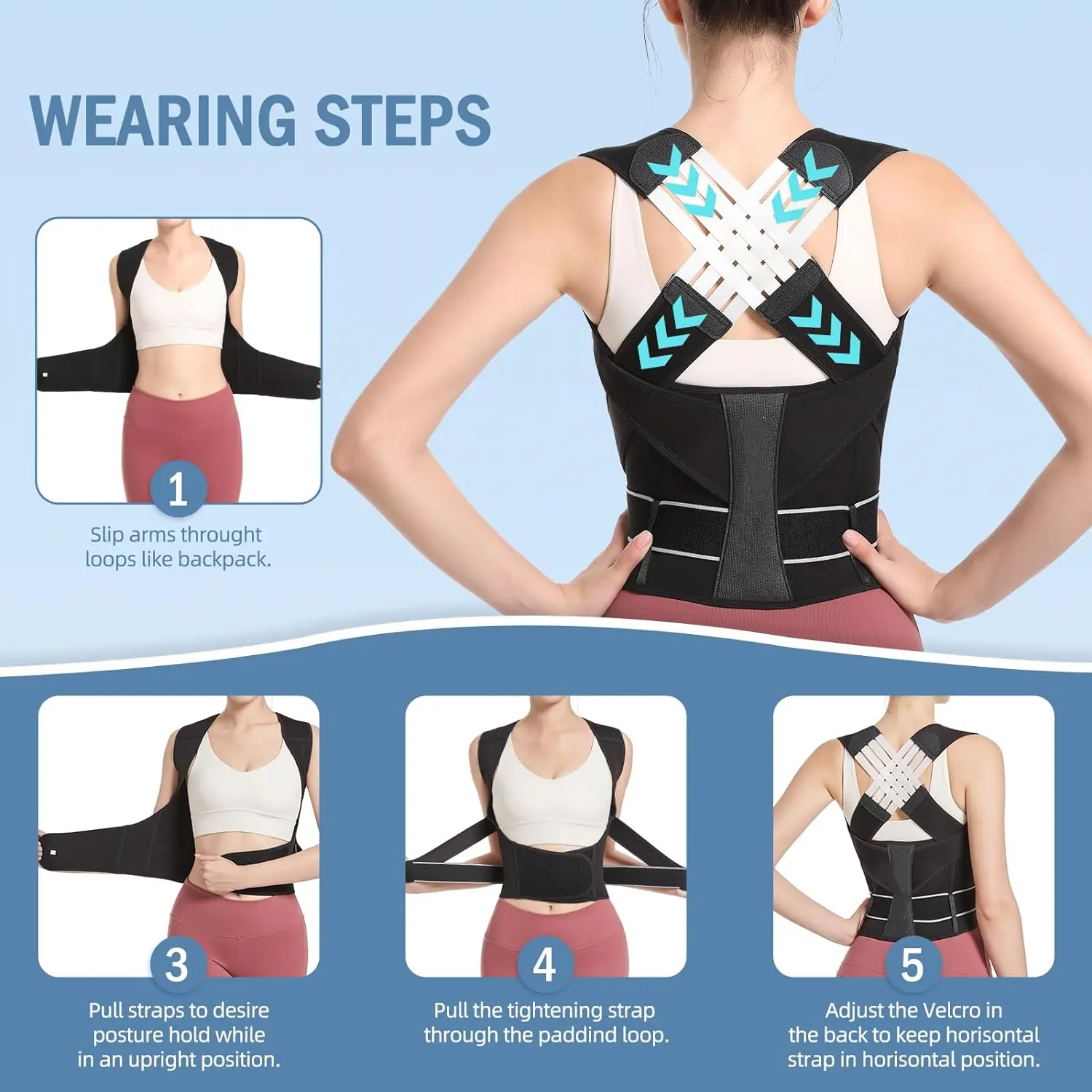
The two straps terminate at a hook-and-loop closure on the chest. The closure is single-handed — the wearer pulls the right wing across the chest with the right hand and secures it on the left panel. The panel itself is a low-profile polyester panel; it sits flat under a buttoned shirt or a light jacket.
Material composition from the product page is Polyester, Spandex. The factory can supply a percentage breakdown by layer for any labelling, customs or compliance review. Confirm before you print.
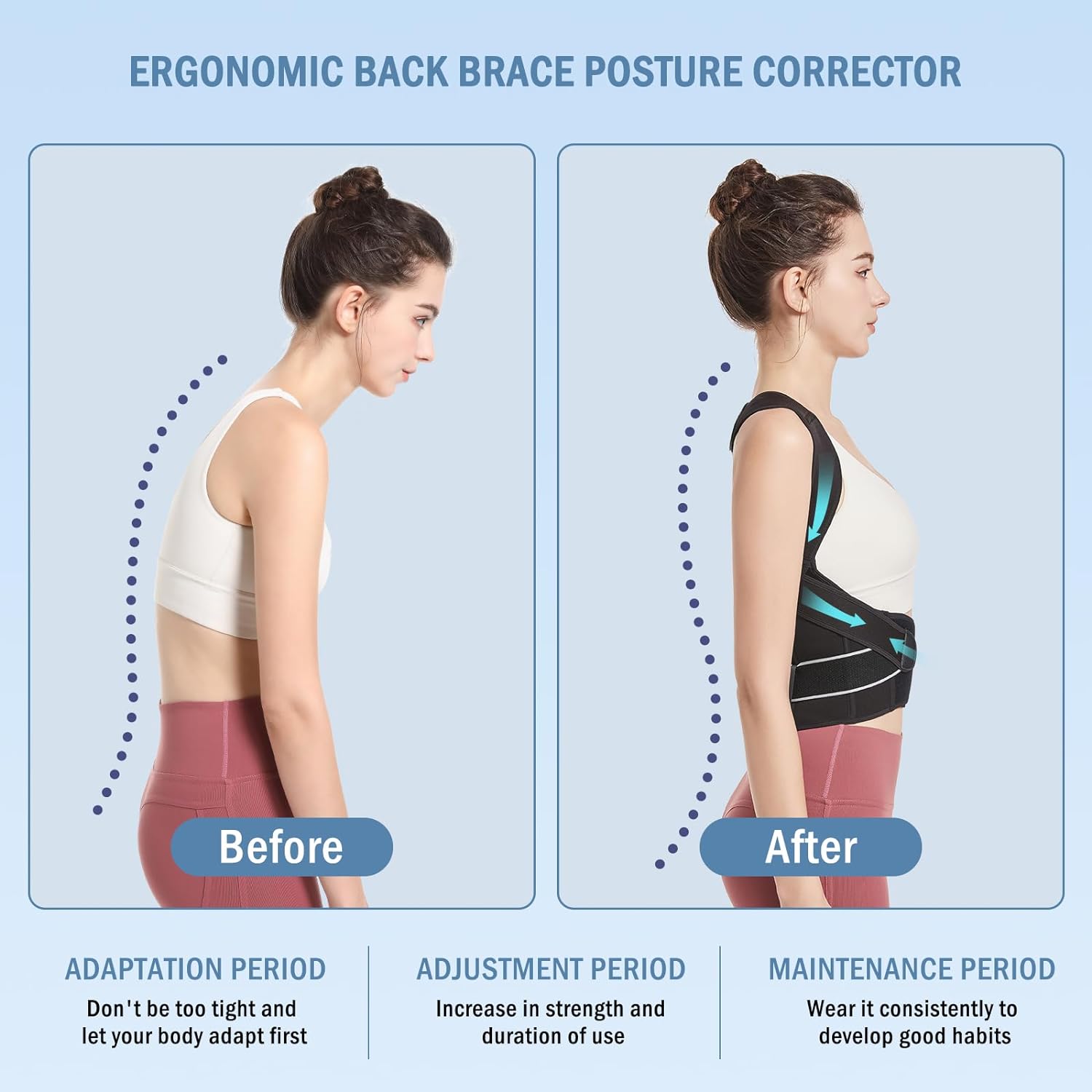
The MSB11 is a daytime brace. It is meant to be worn at the desk, in the car or on a flight, and taken off in the evening. Here is the routine most of our testers settled on.
Loosen both straps fully. Hold the brace with the X across the upper back and the closure open. Slip the arms through the loops so the straps sit over each shoulder. Pull the right wing forward across the chest and secure it on the left panel. Adjust the tension by pulling the wing tighter or loosening slightly. The shoulders should sit back, the chest should feel open, and the wearer should be able to take a full breath without chest restriction.
For desk-day wear, re-cinch once around mid-afternoon as the elastic warms up. For desk days longer than eight hours, take the brace off for at least 30 minutes mid-shift to give the shoulder muscles a chance to do their own work. The MSB11 is a posture reminder, not a substitute for the shoulder muscles.
After the day is done, undo the closure and hang the brace by the front panel so the straps recover their original length. Hand-wash in mild soap, line dry. Do not tumble dry, since heat damages the elastic memory of the strap webbing. Replace the brace when the X-strap stitching starts to fray or when the straps stop returning to original length.
Five sizes — S, M, L, XL and XXL. The product page does not publish chest measurements per size; we will not invent them. Request the size chart before you commit a size run, and confirm against your retailer’s sample so a wrong size chart does not derail the buyback rate.
Custom chest sizes outside S to XXL are available on request. As with MSB12, the minimum order quantity for a non-standard size run is set per quotation.
Indications on the product page are Round shoulder, Hump back, and Clavicle fracture. We keep the indications wording aligned with the factory data rather than expanding the medical claim. Under EU MDR 2017/745, a posture corrector marketed to treat a clinical condition steps into a different conformity class than one marketed as ergonomic or postural support. Documentation, technical files and post-market surveillance differ between the two routes. Tell us before development if your market requires a medical-device classification.
In practical terms, our retail and B2B buyers use the MSB11 back brace posture corrector in four settings.
For office workers who develop rounded shoulders over a long desk career and want a daytime reminder. For drivers and frequent flyers who need a low-bulk brace they can wear under a shirt for a multi-hour shift. For post-clavicle-fracture wearers stepping down from a clinician’s figure-of-eight strap into a daily posture brace, under clinical supervision rather than as a substitute for medical care. And for post-physiotherapy patients who want a daily brace during the months after a clinical course has finished.
For the wider clinical context, the National Institute of Arthritis and Musculoskeletal and Skin Diseases (NIAMS) keeps the most reliable starting-point overview of back pain and its mechanical causes. The American Academy of Orthopaedic Surgeons prevention guide covers workstation posture and sitting mechanics. The MSB11 sells most in that demographic.
Medisolemates holds ISO 13485 certification for the quality management system. The products in the catalogue carry CE conformity and FDA registration references. We do not list the full certificate set on a product page because the certificate scope has to match both the SKU and the destination market. An EU buyer, an FDA-only buyer and a UKCA buyer each get a different certificate bundle, even for the same SKU.
The existing product page lists FDA, CE, ISO13485 as Certificates. ISO 13485 is a quality-system certification held by the legal entity. CE is a conformity marking. FDA is normally a registration or listing rather than a certificate. Confirm the exact wording you want per market before publishing.
We have manufactured orthopaedic and medical support products in Shenzhen since 2010. Cutting, assembly and packing are on one site at the Wanquan Industrial Zone in Longgang. That is what makes small colour runs and quick sample turnarounds realistic for a posture corrector like this.
Customization options on this model 【待确认 — the list below reflects the requests we routinely handle; confirm each against your quotation】:
MOQ, lead time and unit price depend on the size run, colour count and packaging spec. Send us the spec; we will come back with a quotation. Enquiries submitted through this page are answered within 12 working hours.
It changes how you sit while you wear it. The X-strap geometry pulls the shoulders rearward, which reduces how far forward the shoulders can roll during a long desk day. What it does not do, and what no brace can do on its own, is change the length or strength of the muscles that hold the shoulders back. The brace is a reminder. Lasting posture change comes from strengthening the mid-back muscles and from moving more often, with the brace serving as a prompt during the learning phase.
Different region, different mechanism. The MSB11 is a posture corrector. It works through X-shaped straps and a front closure at the chest. It draws the shoulders back. It is sized S to XXL. The MSB12 is a lumbar-area brace. It uses a back panel with four PP stays and two side tension straps. It supports the lower back. It is sized S/M/L. Choose MSB11 for shoulder posture and clavicle-area correction. Choose MSB12 for lumbar support in a desk or warehouse setting.
The MSB11 covers a broader area — shoulder to mid-back — and comes in five sizes. The MSB10 is a single-size universal neoprene upper-back brace with hook-and-loop shoulder straps. It is intended as a short-wear reminder rather than an all-day posture corrector. Choose MSB11 for all-day wear and broader size coverage. Choose MSB10 for an inexpensive single-SKU reminder that fits most wearers out of one box.
For a soft brace like the MSB11, yes for typical desk-day wear. The straps are elastic, not rigid, and the X geometry does not compress the chest. For wear longer than eight hours, take the brace off for at least 30 minutes mid-shift. If the wearer experiences any chest discomfort, numbness in the arms or shortness of breath, remove the brace and consult a clinician.
A posture corrector is a reminder during wear. Permanent change in shoulder position comes from strengthening the mid-back muscles, stretching the front-of-shoulder muscles, and changing habits over months. The brace is part of that combination. It is not the whole combination. Buyers who promise their customers “permanent posture fix in a brace” are setting up a return-rate problem.
The honest answer is that the brace does not change posture on its own. The relevant timeline is the muscle-strengthening timeline the brace supports — typically 8 to 12 weeks of consistent mid-back strengthening exercises combined with brace use. Some wearers report feeling an improvement in shoulder awareness within 2 to 4 weeks. The brace makes the change possible. It does not make the change happen.
Three reasons we hear most often.
One vendor across the back-brace family. MSB02 through MSB12 covers lumbar supports, posture correctors, upper-back reminders and SI belts from the same back-brace manufacturing line. One certificate set, one packaging language, one slider tool across the range.
Five-size run out of the catalogue. Most competitors stop at L. MSB11 ships in S through XXL as a catalogue line — useful for buyers running a European or US D2C programme where demand at the upper end of the size range is real, not theoretical.
Documentation on the buyer’s side. Size charts, material test reports, certificates and the carton marking template all travel with the quotation rather than living only on the website.
Tell us the size run, the colour count, the packaging spec and the destination market, and we will come back with pricing, MOQ and lead time. Quotations are prepared by a person, and every enquiry submitted here is answered within 12 working hours.
Contact: +86 199 2645 9283 · sale@medisolemates.com